
RBA Cash Rate Update Aug 2026
What It Means for Home Buyers, Homeowners and Investors
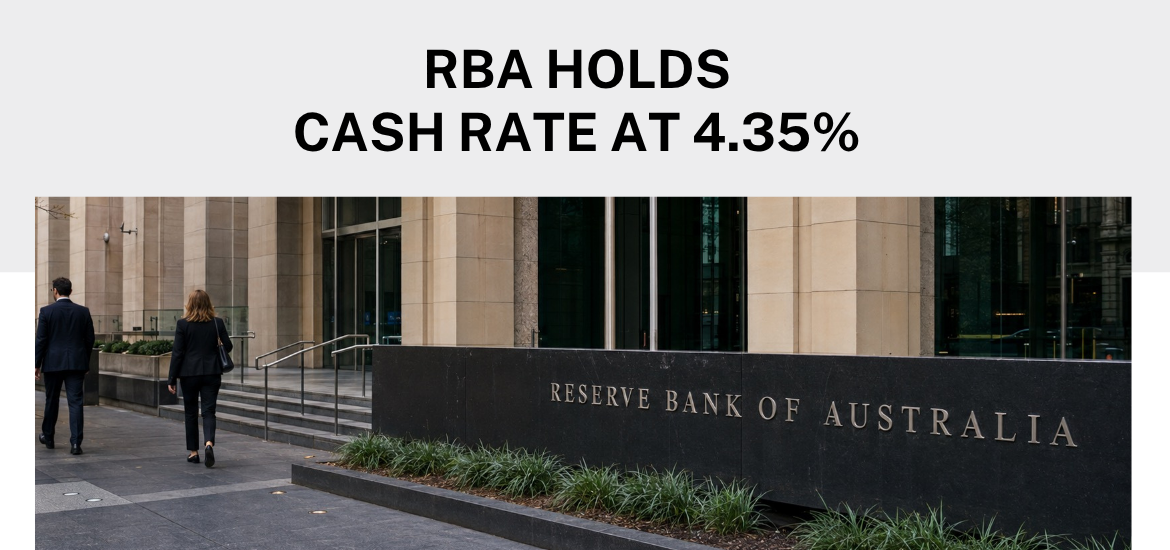
The Reserve Bank of Australia (RBA) has left the official cash rate unchanged at 4.35% following its August monetary policy meeting. The decision reflects the Board’s cautious approach as it continues to monitor inflation, employment and overall economic conditions. You can read the RBA’s full statement here
There are encouraging signs that inflation is moving in the right direction. Annual trimmed mean inflation, which is the RBA’s preferred measure of underlying inflation, remained steady at 3.6% in the 12 months to June 2026 according to the Australian Bureau of Statistics.
However, the RBA is not yet convinced that inflation has been fully brought under control. Governor Michele Bullock recently stated that underlying inflation remains above the target range and that further moderation in demand may still be required. The Board also acknowledged that the full impact of previous interest rate increases is still flowing through to households and businesses.
For borrowers, the latest decision means stability for now, but it remains important to stay prepared for future changes.
RBA Decision Summary
The key takeaway from this month’s announcement is that the RBA has chosen to wait for more evidence that inflation is sustainably returning to its target range before making any changes to interest rates.
While inflation is significantly lower than its peak, the Board remains cautious about easing monetary policy too soon. The economy is showing signs of slowing, household spending remains subdued and many Australians continue to feel pressure from higher living costs and mortgage repayments.
For most borrowers, this means interest rates are likely to remain higher than the ultra-low levels experienced during 2020 and 2021.
How This Affects Mortgage Holders
For homeowners with a variable-rate home loan, the decision means there should be no immediate change to monthly repayments as a direct result of the RBA announcement.
While this offers some welcome certainty, many borrowers are still adjusting to the significant repayment increases experienced over the past two years.
Now may be a good time to:
- Review your home loan interest rate.
- Compare your rate against current market offerings.
- Consider refinancing if your lender is no longer competitive.
- Assess whether extra repayments could help reduce future interest costs.
Many lenders are actively competing for quality borrowers, and refinancing opportunities still exist for suitable applicants.
Impact on First Home Buyers
The extended pause may provide some confidence for first-home buyers who have been waiting for greater certainty before entering the market.
Stable interest rates can help buyers:
- Better understand their borrowing capacity.
- Budget with greater confidence.
- Navigate property searches without the fear of immediate rate increases.
That said, affordability remains a challenge across many Australian property markets. Buyers should focus on building a strong savings history, reducing unnecessary debt and obtaining pre-approval before actively searching for a property.
A stable rate environment can create opportunities, particularly for buyers who are well prepared and ready to act when suitable properties become available.
Impact on Property Investors
Investors are continuing to adapt to higher borrowing costs, but many remain active due to strong rental demand and low vacancy rates across much of Australia.
The current rate pause may provide greater certainty around investment cash flow planning.
Property investors should consider:
- Current rental yield performance.
- Potential future interest rate movements.
- Tax implications and investment structures.
- Long-term capital growth opportunities.
For many investors, securing the right property with strong fundamentals remains more important than attempting to perfectly time the interest rate cycle.
Will Banks Pass on the Change?
Because the RBA left the cash rate unchanged, lenders generally have no reason to adjust variable home loan rates immediately.
However, banks do not always move rates solely in response to RBA decisions. Funding costs, competition and broader economic conditions can all influence pricing.
This means some lenders may still introduce:
- New customer discounts.
- Cashback or refinance promotions.
- Changes to fixed-rate products.
- Special offers for owner-occupiers or investors.
It is worth reviewing your loan regularly to ensure you are still receiving a competitive rate.
Borrowing Capacity Example
Interest rates play a major role in determining how much a borrower may be able to borrow.
As a simple example:
A couple earning a combined income of $180,000 per year with minimal existing debts may be able to borrow around the same amount as they could last month because the cash rate has remained unchanged.
If future rate cuts occur, borrowing capacity may improve. Even a reduction of 0.25% can potentially increase borrowing power by tens of thousands of dollars, depending on the applicant’s circumstances.
Every lender assesses borrowing capacity differently, so obtaining personalised advice is important.
My Outlook for the Next 6 Months
The RBA appears focused on balancing two priorities:
- Bringing inflation back within its target range.
- Avoiding unnecessary pressure on households and businesses.
If inflation continues to moderate and economic growth remains subdued, the conversation may gradually shift towards future rate reductions. However, the RBA has repeatedly emphasised that decisions will remain data dependent.
For borrowers, this means there may be opportunities ahead, but it would be unwise to assume rate cuts are guaranteed or imminent.
The best approach is to remain financially prepared, maintain a healthy buffer and review your lending strategy regularly.
Frequently Asked Questions
Will my mortgage repayments change after this announcement?
No. Since the RBA left the cash rate unchanged, most borrowers should not experience any immediate repayment changes as a result of the August decision.
Should I refinance now or wait?
This depends on your current interest rate, loan features and financial goals. Many borrowers can benefit from reviewing their loan even when the cash rate remains unchanged.
Will borrowing capacity improve if rates fall?
Generally, lower interest rates can increase borrowing capacity, although lender policies and serviceability assessments also play an important role.
Is now a good time to buy property?
The right time to buy is when your finances, goals and circumstances align. Interest rates are only one factor in the property purchasing decision.
How often does the RBA meet?
The RBA Board generally meets throughout the year to assess economic conditions and determine whether changes to the cash rate are required.
Q: How often should I review my home loan?
At least once per year. Market conditions change, new loan products become available, and your personal situation may change. An annual review ensures you’re always getting a good deal.
Why Work with Awesome Lending Solutions?
We make it easy to save money on your home loan, whether rates go up, down, or stay on hold.
What we do for you:
- ✅ Compare rates from over 60 lenders
- ✅ Negotiate better rates with your current lender
- ✅ Handle all refinancing paperwork
- ✅ Find loans with the features you need
- ✅ Provide free rate reduction letters
- ✅ Keep you updated on RBA rate decisions
- ✅ Act in your best interests (required by law)
Our service is free for most home loan customers. We’re paid by the lenders, not by you, so there’s no cost to get expert help.