
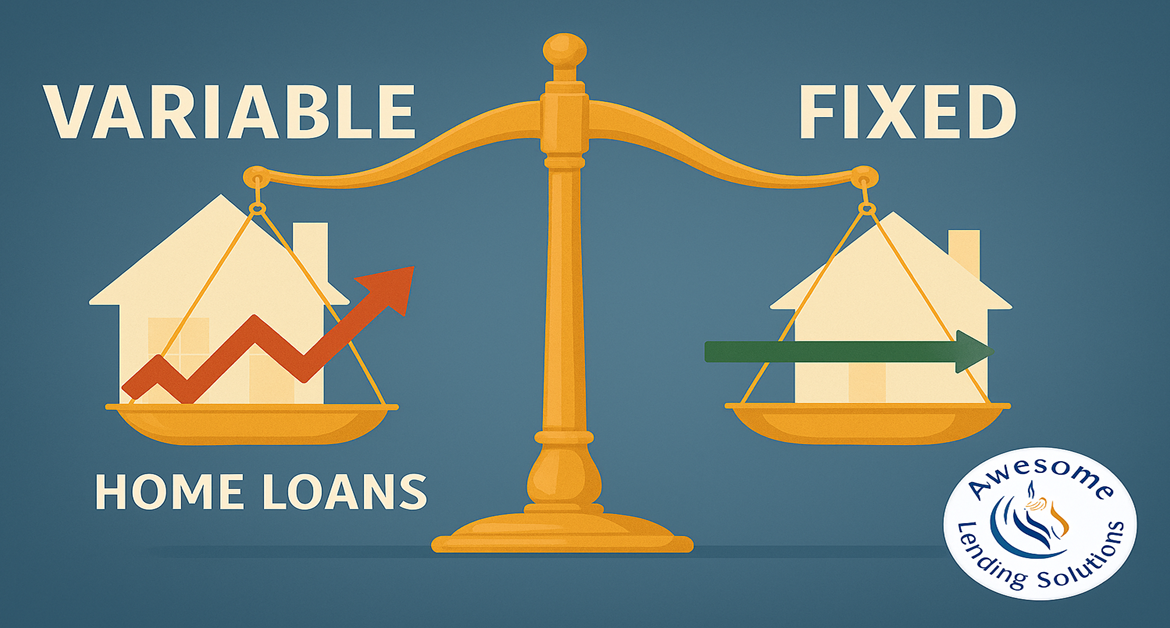
Variable vs Fixed Rate Home Loans: Which One is Right for You?
When you’re getting a home loan in Australia, one of the biggest choices you’ll make is between a variable-rate loan and a fixed-rate loan. Both have good points and not-so-good points. Let’s look at both so you can decide which one works best for you.
What is a Variable Rate Loan?
A variable rate loan is when your interest rate can go up or down over time. The rate changes based on what’s happening in the money market and what your bank decides to do.
Good Things About Variable Rates:
You Can Pay Extra Money Most variable loans let you pay more than your normal payment. This means you can pay off your loan faster and save money on interest.
Lower Fees if You Leave Early If you want to switch to a different loan or sell your house, variable loans usually have smaller fees (or no fees at all) for leaving early.
Extra Features Variable loans often come with helpful extras like:
- An offset account (a savings account that reduces your loan interest)
- A redraw facility (you can take back extra money you’ve paid)
- The ability to make extra payments whenever you want
Rates Might Go Down If interest rates drop in Australia, your rate will probably drop too. This means your payments could get smaller.
Not-So-Good Things About Variable Rates:
Payments Can Change Your payment amount can go up if interest rates increase. This makes it harder to plan your budget because you don’t know exactly what you’ll pay each month.
You Might Pay More Over Time If rates keep going up, you could end up paying more money overall compared to someone with a fixed rate.
What is a Fixed Rate Loan?
A fixed rate loan is when your interest rate stays the same for a set time period. Most people fix their rate for 1 to 5 years.
Good Things About Fixed Rates:
Your Payments Stay the Same You know exactly how much you’ll pay each month. This makes it much easier to plan your budget and know what’s coming.
Protected When Rates Go Up If interest rates increase, your rate stays locked in at the lower amount. You’re protected from paying more.
Peace of Mind You don’t have to worry about rate changes or check the news about what the Reserve Bank is doing.
Not-So-Good Things About Fixed Rates:
Limited Extra Payments Most fixed loans only let you pay a small amount extra each year (usually around $10,000 to $30,000). If you want to pay more, you might have to pay fees.
Big Fees to Leave Early If you want to break your fixed loan before the time is up, you’ll usually pay large fees called “break costs.” These can be thousands of dollars.
Fewer Extra Features Fixed loans don’t usually come with offset accounts or other helpful features that variable loans have.
You Miss Out if Rates Drop If interest rates go down, you’re stuck paying the higher fixed rate until your fixed period ends.
Should You Choose a Fixed or Variable Rate?
The right choice depends on your situation:
Choose a Fixed Rate If:
- You want to know exactly what you’ll pay each month
- You’re worried about interest rates going up
- You prefer security over flexibility
- You have a tight budget and can’t handle payment increases
- You don’t plan to make big extra payments
Choose a Variable Rate If:
- You want to pay off your loan quickly by making extra payments
- You like having flexible options with your loan
- You’re comfortable with your payments changing
- You think interest rates might go down
- You might sell your house or refinance soon
Split Loans – Both Fixed & Variable?
Yes! Many Australians choose a “split loan.” This means you put part of your loan on a fixed rate and part on a variable rate.
For example, you might fix 50% of your loan and keep 50% variable. This way you get:
- Some protection if rates go up
- Some flexibility to make extra payments
- A balance between security and options
What’s Happening with Interest Rates Right Now?
Interest rates in Australia have changed a lot in recent years. It’s important to think about what might happen in the future and talk to a mortgage broker who can help you understand the current market. check out our RBA updates for the latest news.
Final Thoughts
There’s no “best” option that works for everyone. Variable rates give you flexibility and features, while fixed rates give you certainty and protection. Think about:
- Your money situation
- How much risk you’re comfortable with
- Your plans for the future
- What interest rates are doing right now
The most important thing is to choose a loan that helps you sleep well at night and fits with your money goals.
Still Need Help Deciding?
If you’re still not sure which option is right for you, why not talk to us at Awesome Lending Solutions for a tailored recommendation?
We can look at your situation, then discuss and help you make the best choice for your home loan journey.
